
Introduction: The World of Chat Short Forms
Online chatting has changed the way we communicate totally. People can communicate their feelings, views, and responses immediately in a few words or even letters. Be it in text messages, posts in social media or even in online gaming chat room, abbreviations have become an important aspect of our daily digital language.
One such abbreviation, which causes confusion to numerous people, is that of IDTS. You may have noticed it in a chat or on Twitter; and you may have thought: What is IDTS?
This paper will describe the meaning of the IDTS in the full form when chatting, what it actually means, how and when to use it correctly, and even how it is different to other forms of slang. We will also discuss its background, context, examples, and frequently asked questions- and we will have made it a full human-written guide to enable you to use and comprehend the use of the terminology used in internet communication, namely, IDTS.
What Is the Full Form of IDTS in Chat?
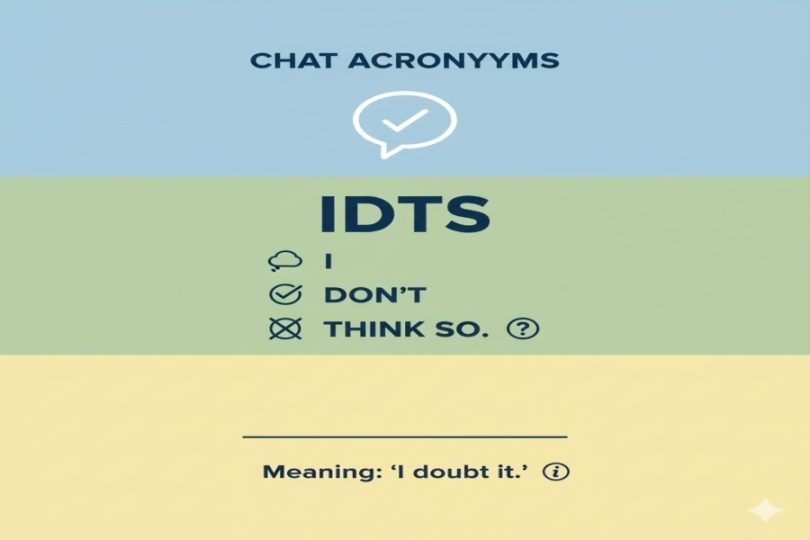
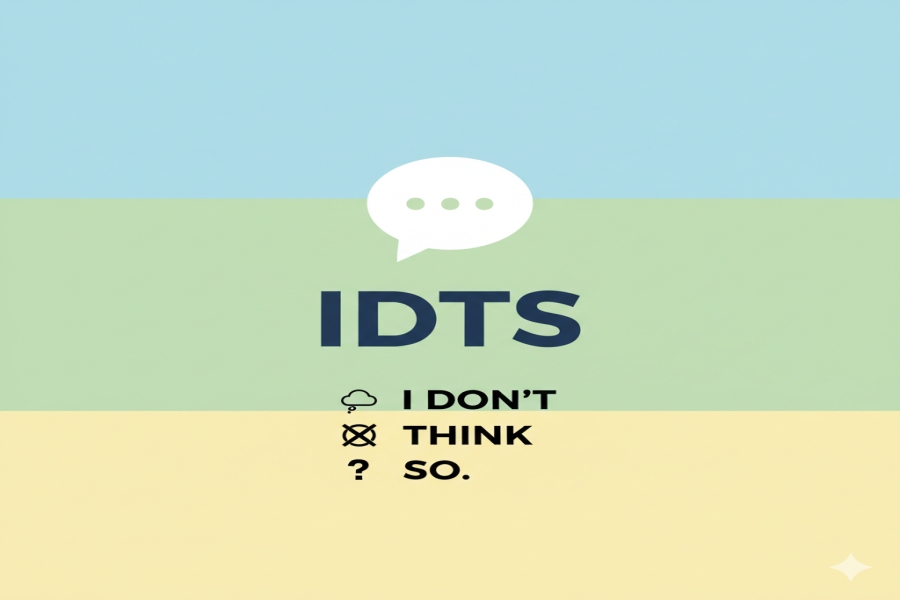
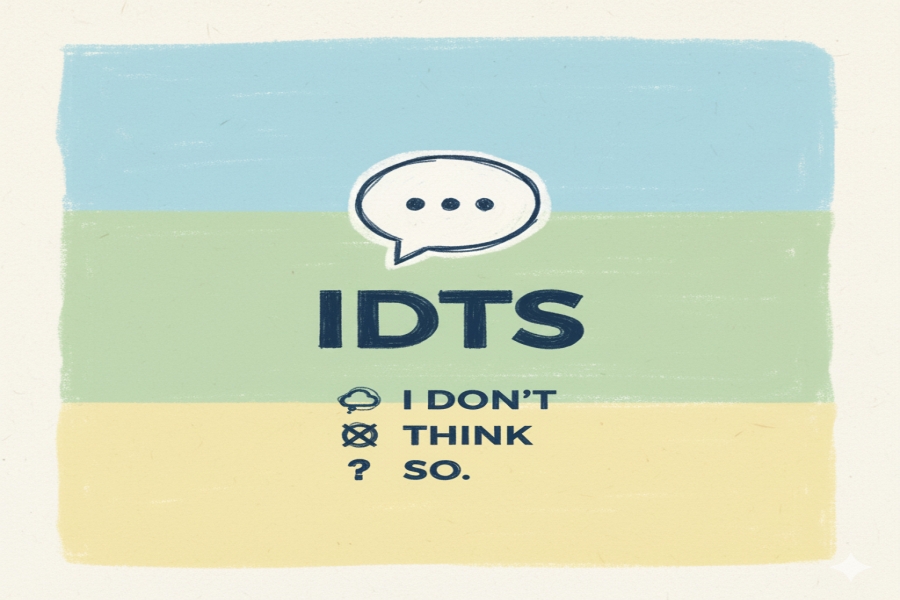
The full form of IDTS in chat is “I Don’t Think So.”
It is a relaxed way of communicating in text messages or using online messengers when you disagree with something or when you are not sure that something is true. It does not mean being rude or harsh, it just means being polite and informal with the way of expressing uncertainty or disagreement.
Example:
- Friend: “Do you think he’s coming today?”
- You: “IDTS.”
Here, “IDTS” means you don’t think so—you’re not sure, but you doubt it.
In essence, IDTS = I Don’t Think So.
It’s short, easy to type, and fits perfectly in the fast-paced world of digital conversation.
The Real Meaning of IDTS
IDTS has a deeper meaning than its translation. It is a polite method of doubts, disapproval or skepticism without being too explicit and negative.
People can use I don’t think so in spoken English to say no in a non-bold manner. Equally, in online communication, the same is being done through “IDTS” which makes the communication light and polite yet articulates your point of view.
IDTS Shows:
- Politeness: It softens disagreement.
- Uncertainty: It implies you’re not completely sure.
- Casual tone: Perfect for friendly or informal chats.
For example:
- “He’s the best player on the team.”
- “IDTS, I think others are better.”
It’s not offensive; it’s simply conversational disagreement.
When to Use IDTS in Chat
IDTS can be used in many situations, but mostly when you want to express doubt, disbelief, or mild disagreement.
Here’s a simple table showing when to use it:
| Situation | Example | Meaning |
| Disagreeing politely | “Do you think she likes him?” → “IDTS.” | You doubt it. |
| Expressing disbelief | “He said he finished the project overnight.” → “IDTS!” | You don’t believe it. |
| Uncertain reply | “Is the store still open?” → “IDTS, it’s already 10.” | You think it’s closed. |
| Light sarcasm | “You’ll stop procrastinating tomorrow, right?” → “IDTS 😂” | Playful or teasing tone. |
You can see how flexible IDTS is—it works for serious, funny, or sarcastic situations depending on your tone and relationship with the person.
Origin and History of IDTS
Similarly to most terms of internet slang, IDTS was first coined in the early 2000s when texting gained its popularity. Individuals desired quicker methods of communicating without having to type long messages particularly on mobile phones that use number-pad type-write interfaces.
With the rise of social media such as Twitter, Facebook, and then Instagram and Tik Tok, IDTS became a regular feature of the online slang. It belongs to the same group of abbreviations such as:
- IMO (In My Opinion)
- IDC (I Don’t Care)
- IDK (I Don’t Know)
So, IDTS evolved as another quick way to express thought or opinion in digital spaces.
Today, it’s commonly used across messaging platforms such as WhatsApp, Snapchat, Discord, Reddit, and Twitter/X.
Examples of IDTS in Real Conversations
Here are some realistic chat examples to help you understand how “IDTS” is used naturally:
Example 1 – Expressing Doubt
A: “Do you think it will rain today?”
B: “IDTS, it looks clear outside.”
Example 2 – Casual Disagreement
A: “I think this new phone is better than the old one.”
B: “IDTS, the camera isn’t that great.”
Example 3 – Playful Sarcasm
A: “You’re going to the gym tomorrow?”
B: “IDTS 😅 You know me too well.”
Example 4 – Being Polite in Disagreement
A: “The boss will promote me next month.”
B: “IDTS, maybe after a few more projects.”
These examples show that “IDTS” fits naturally in friendly or casual digital conversations where tone and context matter more than formality.
Similar Terms and Abbreviations
There are many other abbreviations that are often used in similar contexts to IDTS. Here’s a comparison to help you understand their differences:
| Abbreviation | Full Form | Meaning / Usage | Tone |
| IDTS | I Don’t Think So | Expressing doubt or mild disagreement | Neutral / Polite |
| IDK | I Don’t Know | You are uncertain or unaware | Neutral |
| IDC | I Don’t Care | You’re indifferent or uninterested | Casual / Dismissive |
| IMO | In My Opinion | Sharing a personal viewpoint | Polite |
| TBH | To Be Honest | Expressing sincerity | Honest / Direct |
| IKR | I Know Right | Agreement or shared feeling | Friendly |
This table helps you see where IDTS fits in: it’s part of the “opinion/doubt” group of internet slang.
Why People Use IDTS Instead of “I Don’t Think So”
- Saves Time – It’s faster to type, especially in quick chats.
- Looks Trendy – Abbreviations are a hallmark of online culture.
- Softens Tone – “IDTS” sounds lighter than a firm “No.”
- Feels Natural in Digital Spaces – Fits perfectly in short messages or comments.
- Expressive – When paired with emojis or GIFs, it conveys emotion easily.
For example:
- “IDTS 😅” → Soft disagreement with humor.
- “IDTS 🤔” → You’re uncertain or thinking.
- “IDTS 😂” → Used jokingly.
It’s flexible enough to fit multiple emotions depending on the tone and context.
Psychological Impact: The Politeness of IDTS
The popularity of IDTS is psychological in one sense. Individuals are always afraid of being rude or reproving in online communication. It is sometimes rudely final to say no.
but that is cushioned softer by IIDTS. It allows you to be doubtful and not shut it off. It is almost the same as saying, I may be wrong, but I do not believe that is the case.
This minor language trick is used to maintain friendly and open conversations particularly in the text mode of communication where one can easily misinterpret tone.
How to Use IDTS Effectively
Here are a few tips to make sure you use IDTS naturally and correctly:
- Use in Informal Conversations Only
Avoid using it in formal or professional emails. In those cases, write the full phrase “I don’t think so.” - Pair with Context
Don’t send “IDTS” alone in serious conversations—it might seem dismissive. Add explanation if needed.- Bad: “IDTS.”
- Better: “IDTS, but let’s check again to be sure.”
- Use Tone Markers or Emojis
Emojis help convey tone. “IDTS 😅” or “IDTS 🤔” makes your message sound friendly. - Avoid Overuse
Use IDTS sparingly. Too much of it can make you seem unsure or uninterested.
IDTS in Different Platforms
Let’s see how IDTS is commonly used on popular digital platforms:
| Platform | Example Usage | Tone / Style |
| “IDTS, we already completed that task.” | Friendly / Conversational | |
| Twitter / X | “They’re going to cancel the show? IDTS.” | Short / Witty |
| Instagram Comments | “He’ll quit soon? IDTS 😂” | Playful |
| Discord / Gaming Chat | “IDTS, that update is fake.” | Direct / Quick |
| Snapchat | “IDTS she’ll reply 😅” | Humorous / Casual |
Each platform has its own vibe, but IDTS fits naturally into all informal online spaces.
Common Mistakes to Avoid
| Mistake | Why It’s Wrong | Correct Form |
| Using IDTS in business emails | Too casual and unprofessional | Use “I don’t think so.” |
| Misunderstanding tone | Can sound rude without emojis/context | Add emoji or explanation |
| Overusing abbreviation | Reduces clarity | Mix with full sentences sometimes |
Being mindful of these helps maintain clarity and tone in your online communication.
The Evolution of IDTS in Modern Communication
Technology is always changing the language. Like some kinds of abbreviations such as LOL, BRB, and OMG became a pop culture, so does IDTS have found its way as a means of light opinion or disapproval.
It is the depiction of modern communication that values efficiency, personality, and relatability. Users are not fond of long replies as they prefer to use short, expressive, human-sounding messages that are in line with the rhythm of the online life.
The emergence of the texting culture, memes, and short content has simply made such abbreviations as IDTS even more topical. They enable individuals to communicate more with less which is just right in our digital lifestyle nowadays.
Fun Facts About IDTS
- The term started appearing frequently in early 2000s text messages and AIM chats.
- IDTS gained popularity again through TikTok and Twitter memes in the 2020s.
- Some users humorously say it means “I Definitely Think So,” flipping its meaning sarcastically.
- IDTS is used more by Gen Z and millennials than older internet users.
- It’s often used with GIFs or memes for added humor or sarcasm.
FAQs About IDTS
Q1. What does IDTS stand for in chat?
IDTS stands for “I Don’t Think So.” It’s used to express doubt or polite disagreement in texting or online conversation.
Q2. Is IDTS rude to use?
No, IDTS is not rude. It’s a polite, informal way of expressing uncertainty or mild disagreement.
Q3. Can I use IDTS in formal writing?
You shouldn’t. Use the full phrase “I don’t think so” or “I’m not sure about that” in formal communication.
Q4. Is IDTS the same as IDK?
No. IDTS means I don’t think so, while IDK means I don’t know. IDTS shows opinion; IDK shows lack of knowledge.
Q5. How do I respond when someone says IDTS?
You can either confirm or disagree politely:
- “Yeah, maybe you’re right.”
- “Actually, I think it’s true.”
Q6. Is IDTS used sarcastically?
Yes, sometimes. For example: “You’ll stop eating junk food tomorrow?” → “IDTS 😂”
Conclusion
One of such simple but effective phrases which reflect the essence of online communication is the abbreviation IDTS, which means I Don’t Think So. It is brief, cordial, and it works well in expressing doubt or disagreement without appearing to be rude.
Since the time of initial text messages up to current social media IDTS keeps developing as one of the phrases of easy conversation, doubt, and mocking. With proper consideration, it brings sanity and soul to your conversations and makes it less formal and more human.
Therefore, whenever you are in a situation where someone asks you a question you are not sure about, avoid the elaborate response and simply state IDTS it will be the best response to strike the right balance between being casual and confident in your responses.